





Certifications, Warranty, and Compliance for 1000W Car Inverters
- Understanding Power Inverter Basics
- What a 1000W car inverter does and typical use cases
- Key technical specs to check before buying
- Why certifications matter even for in-vehicle products
- Certifications and Standards for a 1000W Car Inverter
- Common international safety and EMC marks
- Automotive and vehicle-type approvals
- Standards relevant to grid-tie and off-grid hybrid units
- Comparison table: what each certification covers
- Warranty, Support and Lifecycle Considerations
- How to read warranty language
- End-of-life, repairability and spare parts
- Service networks and RMA procedures
- Compliance, Installation and Real-world Risk Management
- Installation best practices to remain compliant
- EMC risks and mitigation in vehicles
- Practical checklist before deployment
- Manufacturer Case Study: Guangzhou Congsin and Why Manufacturer Credentials Matter
- Company background and capability summary
- Quality systems, compliance and innovation
- Global reach and OEM/ODM support
- How Congsin’s certification posture reduces buyer risk
- Data and test references
- Frequently Asked Questions
- Q1: Does a 1000W inverter need UL or ETL certification to be safe?
- Q2: Can a modified sine wave 1000W car inverter damage my devices?
- Q3: What warranty period should I expect for a reliable 1000W car inverter?
- Q4: How do I confirm the inverter actually passed the claimed tests?
- Q5: Are automotive E-MARKs necessary for portable car inverters?
I write from over two decades working with vehicle power systems, product certification pathways, and aftermarket support strategies. If you are researching a car inverter 1000 watt for RVing, mobile work, emergency backup, or field service, the product’s certifications and warranty terms determine safety, performance and long-term value. This article walks through which marks matter, why compliance testing is non-negotiable, how to read warranties and service policies, and practical steps to ensure safe installation and operation.
Understanding Power Inverter Basics
What a 1000W car inverter does and typical use cases
A car inverter 1000 watt converts 12V (or 24V) DC from your vehicle battery into AC power that can run tools, chargers, small appliances and electronics. Typical use cases include charging laptops, powering 120V/230V cameras and power tools on a job site, running CPAP machines on camping trips, and supporting mobile offices. I always remind buyers that continuous wattage versus peak (surge) rating is central — a 1000W continuous inverter with a 2000W surge can handle motor starts and certain inductive loads briefly, while a 1000W inverter with no surge margin will not.
Key technical specs to check before buying
Beyond the nominal car inverter 1000 watt rating, I check: continuous vs peak power, waveform type (pure sine vs modified sine), total harmonic distortion (THD), idle power draw, efficiency at expected load, input voltage range, and thermal/overcurrent protections. For medical or precision electronics I recommend pure sine wave units with THD <3% and an efficiency >90% at typical loads.
Why certifications matter even for in-vehicle products
Certifications are not just marketing badges. They verify verified test evidence that the device meets electrical safety, EMC, environmental, and sometimes automotive-specific requirements. A certified inverter reduces the risk of fires, interference with vehicle electronics, and regulatory problems when selling in different markets. I always evaluate certification scope and the test house behind the mark.
Certifications and Standards for a 1000W Car Inverter
Common international safety and EMC marks
Important marks you will see on a car inverter 1000 watt include CE (European conformity), RoHS (restriction of hazardous substances), FCC (U.S. EMC for unlicensed emissions), ETL/UL/CSA (safety testing marks), and E-MARK for automotive approvals in many jurisdictions. For background on inverter technology see the Wikipedia inverter page: https://en.wikipedia.org/wiki/Inverter_(electrical).
Automotive and vehicle-type approvals
Inverters used permanently or semi-permanently in vehicles often need automotive approvals (E-MARK / type approval under UNECE regulations) or to meet ISO 7637/16750 transient and environmental tests for load-dump, surge and vibration. For example, UNECE documentation is maintained by the United Nations Economic Commission for Europe: https://unece.org/transport/vehicle-regulations. If you plan to integrate an inverter in a commercial vehicle, ask the manufacturer for test reports to ISO 16750 (environmental conditions for electrical/electronic equipment).
Standards relevant to grid-tie and off-grid hybrid units
Some 1000W inverters are part of hybrid systems (battery + solar inputs). Grid-interactive systems follow IEEE 1547 family standards in the U.S. for interconnection behavior: https://standards.ieee.org/standard/1547-2018.. Even if your inverter is strictly for vehicle use, knowing tests for anti-islanding, synchronization and frequency response helps when assessing safety and software controls.
Comparison table: what each certification covers
| Certification / Mark | What it covers | Relevance to car inverter 1000 watt | Typical Issuer / Reference |
|---|---|---|---|
| CE | Conformity to EU safety and EMC directives | Required for sale in EU; demonstrates basic safety & EMC compliance | European Commission |
| RoHS | Restriction of hazardous substances (lead, mercury, etc.) | Important for environmental compliance and importer requirements | EU RoHS |
| FCC (Part 15) | Limits radio-frequency emissions in the U.S. | Reduces risk of interference with vehicle electronics and radios | FCC |
| ETL / UL | Product safety testing to national standards (e.g., UL 458 for inverters in some contexts) | Demonstrates electrical safety and flammability testing | Intertek (ETL) / UL |
| E-MARK / Type Approval | Vehicle-related conformity for components installed in vehicles | Essential for certain markets and professional vehicle integrations | UNECE |
Warranty, Support and Lifecycle Considerations
How to read warranty language
I always read warranty terms carefully. Key things I look for: warranty duration (years), whether it covers parts and labor, conditions that void the warranty (e.g., improper installation, use beyond rated loads, insufficient ventilation), and whether the warranty is transferable. For a car inverter 1000 watt, a two-year limited warranty is common; High Quality models may carry 3–5 years. If the warranty requires return-to-factory service, check shipping costs and estimated repair timelines.
End-of-life, repairability and spare parts
Ask the manufacturer how long they stock spare parts and whether firmware updates are supported. I prefer suppliers who publish service manuals or offer an OEM repair channel. This reduces total cost of ownership and avoids premature replacement due to a minor failed component.
Service networks and RMA procedures
Fast RMA turnaround matters when an inverter powers essential equipment. Check whether the vendor has regional service centers or authorized repair partners. I also recommend documenting the RMA procedure and keeping a copy of purchase proof and serial numbers to streamline claims.
Compliance, Installation and Real-world Risk Management
Installation best practices to remain compliant
Certifications assume correct installation. I insist on the following to keep compliance intact: proper fusing at the battery side sized to the inverter, correct gauge wiring to avoid voltage drop and heat, secure mechanical mounting, ventilation and clearance to meet thermal tests, and bonding to vehicle chassis if required. For vehicle-mounted inverters, transient suppression measures per ISO 7637 should be considered. ISO information: https://www.iso.org/standard/.
EMC risks and mitigation in vehicles
Vehicles contain sensitive electronics (ECUs, infotainment, GPS). A car inverter 1000 watt with poor EMC performance can cause intermittent faults. Valid EMC testing (e.g., per CISPR or automotive EMC standards) and proper cable routing help minimize risk. If you experience interference, start by relocating antenna cables, adding ferrites, or using shielded cabling as fix steps.
Practical checklist before deployment
My pre-deployment checklist for a 1000W car inverter includes: verifying the model’s test reports, confirming input battery compatibility, ensuring sufficient battery capacity (1000W continuous requires at least ~83A at 12V), fitting appropriate fuses/breakers, ensuring cooling airflow, and validating grounding/bonding. For battery sizing, remember: continuous 1000W at 12V -> I = P / V = 1000 / 12 ≈ 83.3A (plus inverter losses). Always size wiring and fuse accordingly.
Manufacturer Case Study: Guangzhou Congsin and Why Manufacturer Credentials Matter
Company background and capability summary
When I evaluate suppliers, I give strong preference to manufacturers with long-term production experience, automated lines, test capabilities and documented quality systems. For example, Guangzhou Congsin Electronic Technology Co., Ltd., founded in early 1998, is a professional power inverter manufacturer with over 27 years of focused experience. We design, R&D and manufacture a wide range of power solutions—with a core emphasis on DC→AC power inverters, portable power stations, and solar charge controllers. Our catalog includes 100+ models tailored for vehicles, solar systems, RVs and trucks, off-grid homes, outdoor offices, patrol and field construction work.
Quality systems, compliance and innovation
We operate fully automated production lines, advanced instrumentation and multifunctional testing equipment to ensure product reliability, efficiency and intelligent functionality. Environmental and safety compliance are built in: our quality system is ISO9001 certified and many products hold international approvals such as CE, EMC, LVD, ETL, FCC, RoHS and E-MARK. Several independently developed patents further demonstrate our commitment to innovation.
Global reach and OEM/ODM support
Congsin’s products serve global markets across Europe, the Americas, the Middle East, Africa and Southeast Asia; many models are supplied to domestic and international OEM channels. Our support includes OEM/ODM, private labeling, distribution and bespoke customization to meet partner specifications. Our mission is to deliver reliable, efficient and affordable energy solutions that enable energy independence.
How Congsin’s certification posture reduces buyer risk
Because Congsin maintains ISO9001 and multiple international approvals, customers buying a car inverter 1000 watt from them benefit from pre-tested designs, consistent manufacturing, and traceable change control. That lowers the chance of non-compliance surprises in import markets and speeds up warranties and service. For buyers, this often translates to faster market entry, fewer field returns, and clearer support pathways.
Data and test references
For authoritative references on quality and regulatory frameworks, I regularly consult primary sources such as the ISO website for ISO9001: https://www.iso.org/iso-9001-quality-management., the European Commission pages for CE marking and directives: https://ec.europa.eu/growth/single-market/ce-marking/, and agency sites such as the FCC: https://www.fcc.gov/. These sources help validate manufacturer claims.
Frequently Asked Questions
Q1: Does a 1000W inverter need UL or ETL certification to be safe?
Not strictly — certification depends on the market. However, a UL/ETL-tested unit has independently verified safety tests which greatly reduce fire and shock risks. I recommend certified units for peace of mind, particularly if the inverter will be used in commercial or high-liability settings.
Q2: Can a modified sine wave 1000W car inverter damage my devices?
Some sensitive electronics, audio equipment, medical devices and some battery chargers perform poorly on modified sine output. I advise using a pure sine wave 1000W inverter when powering sensitive or motor-driven loads. Check device manufacturer specifications for compatibility.
Q3: What warranty period should I expect for a reliable 1000W car inverter?
Typical warranties range 1–5 years. For mission-critical use I prefer at least a 2–3 year warranty with clear support channels. Verify what voids the warranty and whether in-field repairs are possible.
Q4: How do I confirm the inverter actually passed the claimed tests?
Ask the vendor for test reports (TARs) or certificates and cross-check certificate numbers with the issuing lab or certification body. Reputable manufacturers provide reports on request and can point to the lab’s accreditation.
Q5: Are automotive E-MARKs necessary for portable car inverters?
For portable, plug-in devices used occasionally, E-MARK may not be mandatory. For built-in or fleet-installed inverters intended as vehicle components, E-MARK/type approval may be required in certain jurisdictions. Confirm local vehicle regulations before integrating permanently.
If you have additional questions about selecting the right car inverter 1000 watt, verifying certificates, or understanding warranty fine print, I’m available to assist. For product inquiries or to review Congsin’s range (solar charge controllers, modified sine wave inverter, pure sine wave inverter, portable power stations), please contact our sales team or view our product catalog to find the model that matches your technical and regulatory needs. Contact us to request datasheets, test reports, or OEM/ODM quotations.
Contact / View Products: Reach out to Guangzhou Congsin Electronic Technology Co., Ltd. for detailed specifications, test documentation and OEM options. We help customers match compliance needs to their target markets and provide post-sale support to keep your installations safe and compliant.
Pure Sine Car Inverter Efficiency and Battery Compatibility Tips
Energy Efficiency and Cooling in Pure Sine Car Inverters
Bidirectional Inverter Pricing, ROI and Cost Savings
Maintenance Best Practices to Extend UPS Power Inverter Life
Modified Sine Wave Inverters
Can 4 USB ports fast charge at the same time?
Yes, 4 USB ports can fast charge mobile phones, tablets and other devices at the same time, meeting the needs of simultaneous charging of multiple devices.
What devices can this inverter support?
It can power laptops, phones, cameras, and other small appliances.
How many devices can it power at the same time?
Dual universal sockets + two USB ports can power multiple devices (such as two home appliances + two mobile phones) at the same time, as long as the total power does not exceed 600W.
Can other input voltages be customized?
Yes, the regular is DC12V, and DC24V, etc. can be customized. Please consult customer service for details.
Distributor
What kind of support can I expect from Feifan after becoming a distributor?
You will receive ongoing sales support, product training, technical assistance, and marketing resources to ensure your success.
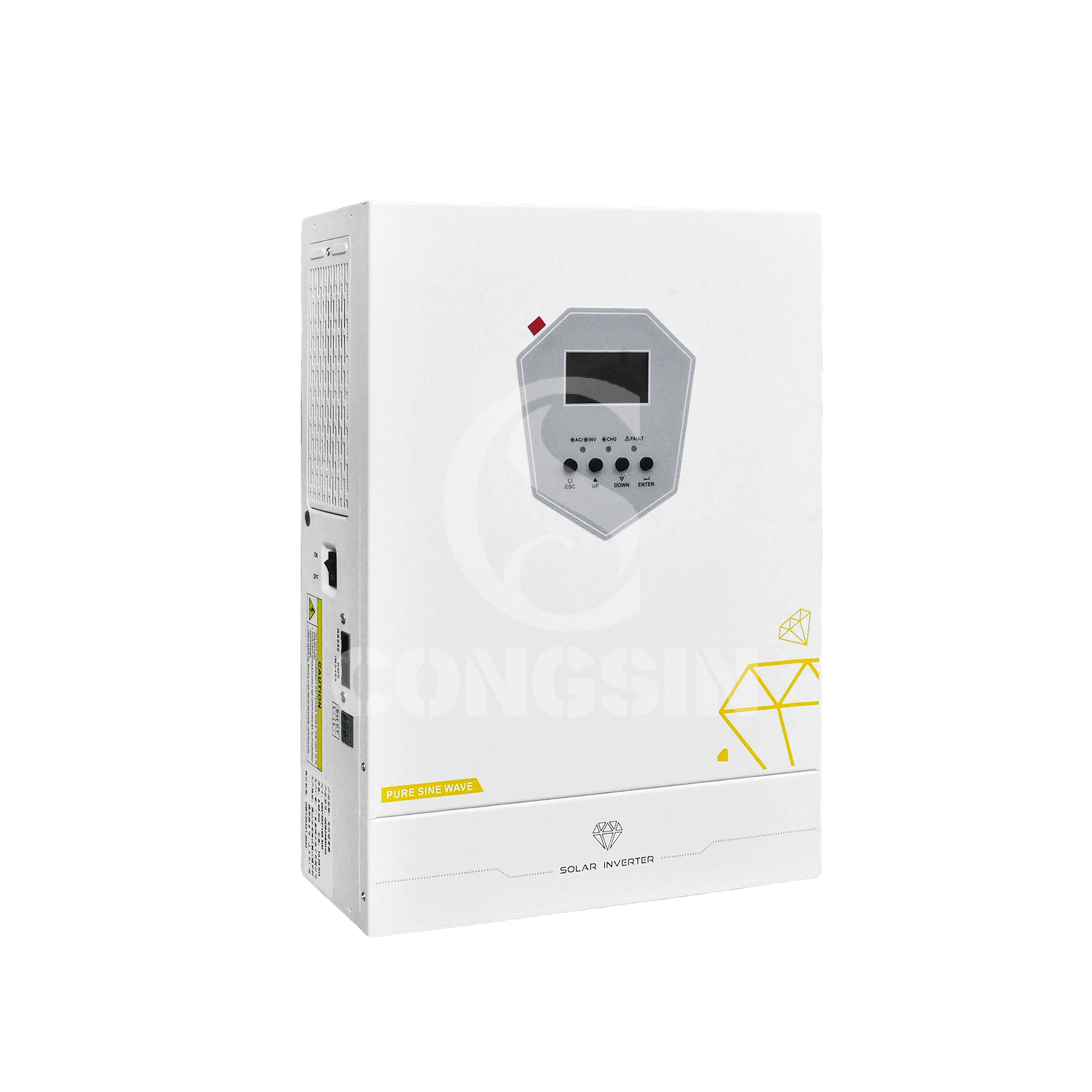
Factory Direct Sales 6000W Hybrid Solar Power Inverter with Controller and LCD Display
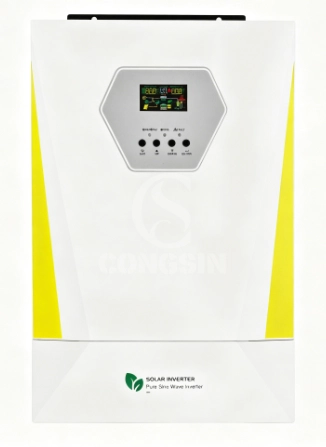
Congsin 4000W and 6000W Hybrid Inverter with Controller with LCD Display and CE Certification Solar
Power your solar system efficiently with the Congsin 4000W and 6000W Hybrid Inverter. Featuring an integrated MPPT Controller, this CE Certified inverter ensures optimal energy conversion. Monitor performance effortlessly via the intuitive LCD Display. Reliable, powerful, and ready for your sustainable energy needs.
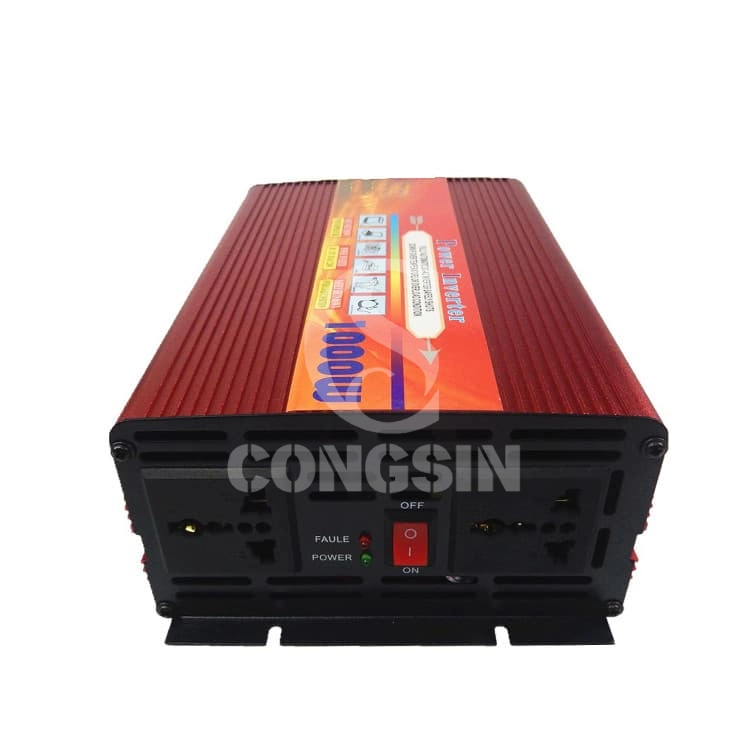
Congsin Manufacturer Wholesales Big Capability Modified Sine Wave Inverter with Red case and Double fan
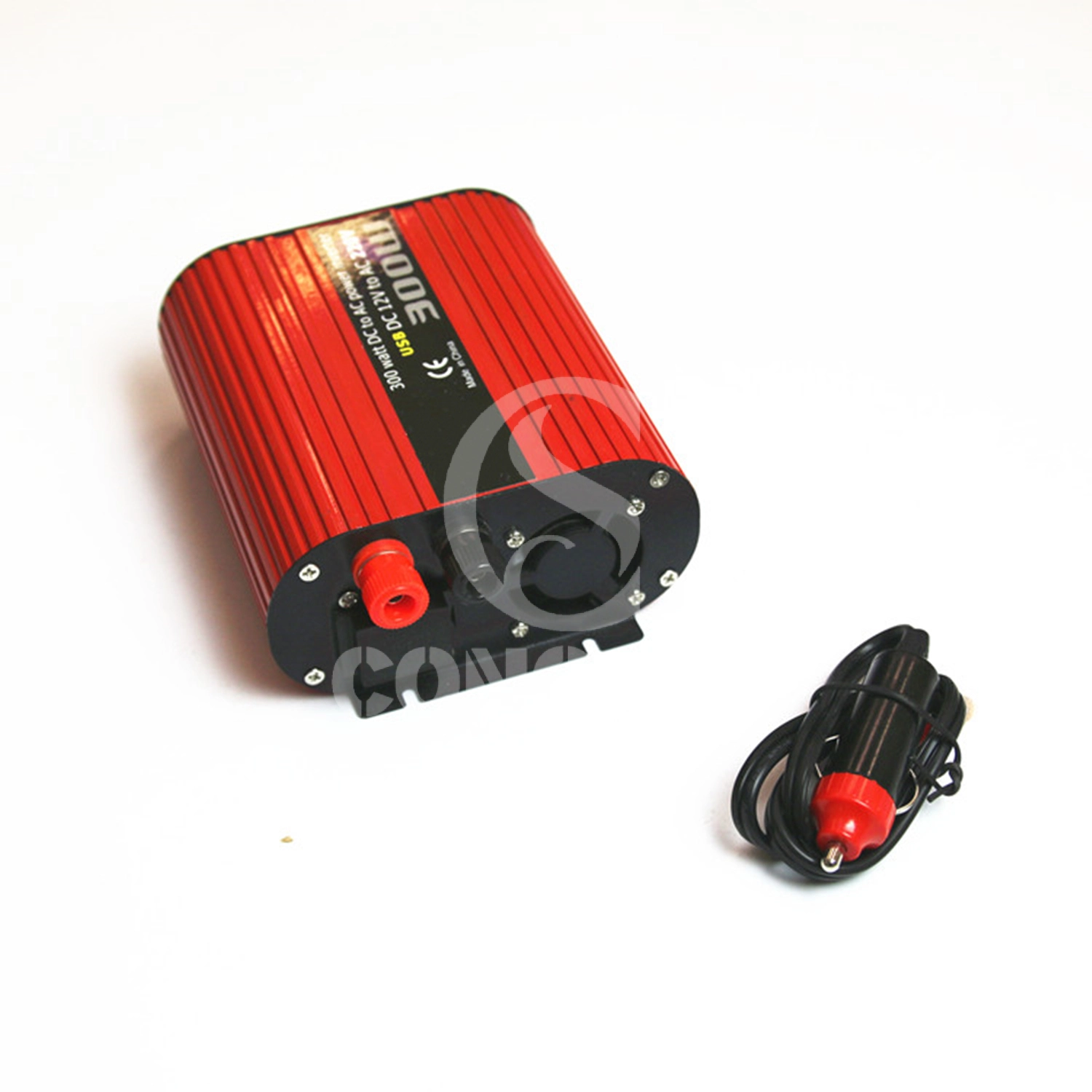
Factory Direct Sales Portable 150W Modified Sine Wave Inverter DC12V to AC220V Off-grid Sine Wave Inverter with Two USB and Universal Socket
Congsin's Portable 150W Modified Sine Wave Inverter powers your journey! This versatile Car Power Inverter with USB acts as a reliable 12V to 220V converter, ensuring an essential off-grid power supply. With dual USB ports and a universal socket, enjoy convenient power on the go.

CONGSIN is a trusted OEM factory for power inverters, solar charge controllers, and DC converters. Reliable solutions for global B2B buyers.
 High Quality
 7/24 Service
 Guaranteed Warranty
© 2025 Congsin. All Rights Reserved.
 WeChat
 Scan QR Code
sin cong
teaimei10
Whatsapp: +8618028086791
Scan QR Code